
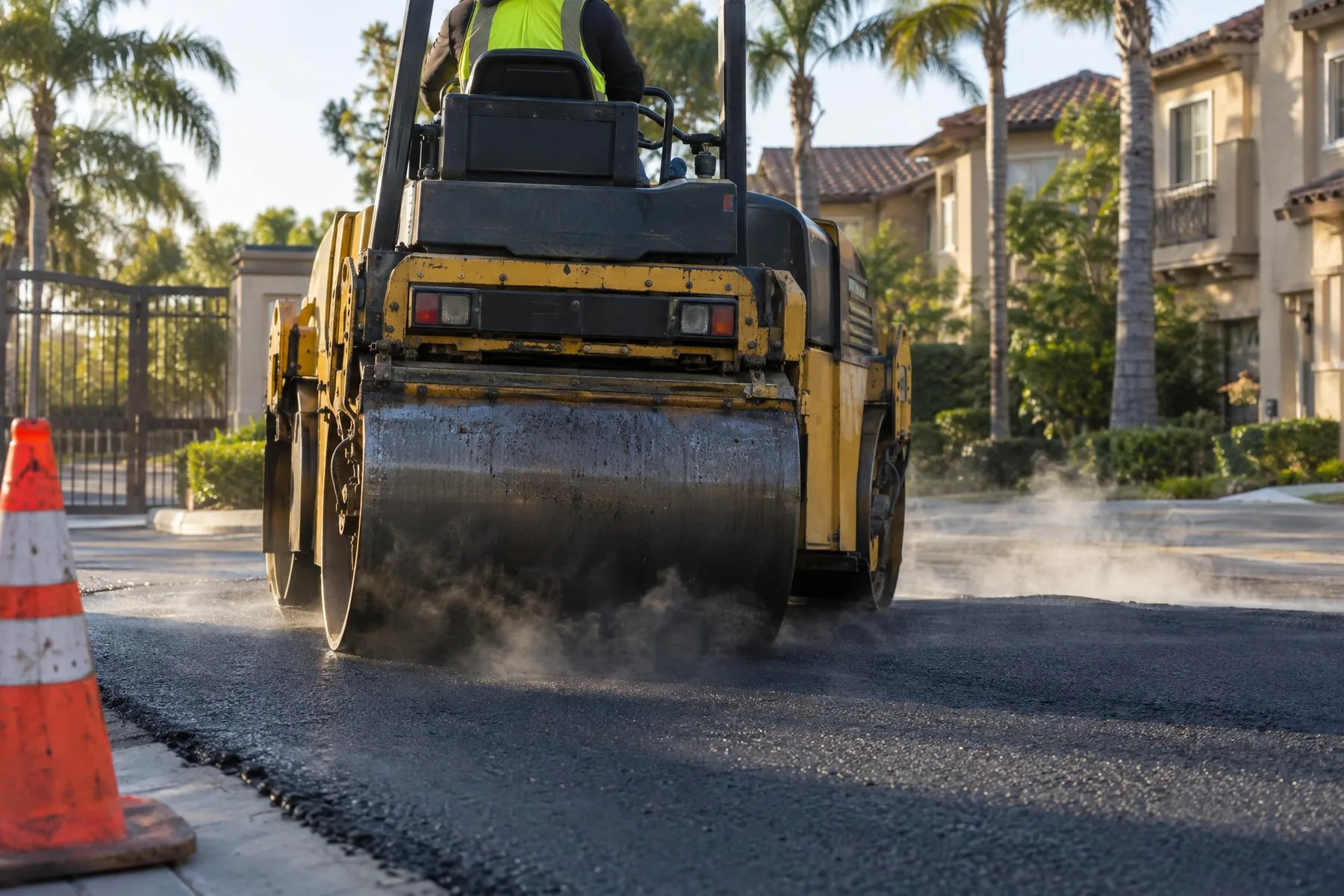
Steel-drum roller compacting fresh asphalt on a residential community street with cones and palms

How Asphalt Paving Works in Coconut Creek, FL: How Long Before You Can Drive On New Asphalt

How Asphalt Paving Works on a Coconut Creek, FL Driveway or Parking Lot, Step by Step

Coconut Creek Asphalt Paving & Resurfacing walks owners in Coconut Creek, FL and Broward County through a paving job, from the first visit to the day the cones come off. Below you will find how asphalt paving works, plus the paving process itself, the lifespan of a surface and the wait before you can drive on new asphalt. Each section follows one stage, and the same logic applies to a driveway, a lot or a community road.

Why homeowners choose us:

  • Free written estimates for every paving job
  • Compacted base under every new surface, not just a layer of asphalt on top
  • Warrantied work every job backed by a written warranty
  • Licensed and insured certificate on request

The crew has 15+ years of South Florida paving and 1,100+ driveways, lots and roads completed. Every job runs in the same order, and the estimate lays out that order before a shovel touches the ground. A free written estimate opens the paperwork and a written warranty closes it, so both ends of the job are on paper.

Get a FREE Asphalt Paving Quote

How Asphalt Paving Works: Why Coconut Creek Pavement Cracks First

Pavement looks simple from the street, yet it is a stack of layers. A home driveway’s asphalt is usually 3 to 5 inches deep and rests on a 4 to 8 inch bed of compacted rock that takes most of the weight. Let water soften that bed and tires start flexing the surface until it cracks. Drainage, base strength and compaction decide whether that happens.

Coconut Creek’s ground raises the stakes. NRCS maps Basinger, Hallandale, Margate and Pompano fine sands across the area, and during the wettest months groundwater climbs to about 6 inches below the surface. Immokalee sits near 12 inches, Pomello near 30 and Duette near 60, so one property can hold both wet and dry ground. A base this close to water weakens when soaked, which is why wheel paths crack first and potholes follow.

Rain adds to the strain. From May 15 to October 15, nearly 70% of the annual rainfall arrives, and the Broward County normal at Fort Lauderdale-Hollywood is about 56 inches a year. Any open crack gives that water a way into the stone, and stone that stays wet loses its grip and washes away, so small cracks deserve attention before summer. A South Florida paving contractor puts it simply: fix a drainage problem first or end up spending twice as much. The top coat gets the credit, but the layers underneath earn it. Sound stone, drains that work and thorough rolling are what keep a driveway smooth ten years from now.

How Asphalt Paving Works in Five Steps on a Coconut Creek Driveway or Parking Lot

The asphalt paving process follows one pattern on every property, and the size of the job is the main difference.

1. Estimate and Base Check

A phone call books the visit. On site, the estimator walks the surface, probes soft spots and watches where water goes after rain. Afterward you receive a free written estimate that lists base work, compacted thickness and price on separate lines, so the scope is settled before anything starts. Photos of problem areas can be attached whenever they help you or your board understand the plan.

2. Tear-Out and Base Preparation

Machines break up failed asphalt and carry it away, then dig out soft or filled ground. Fresh stone goes in thin lifts, and the base is packed down lift by lift until it feels solid and the grade sheds water. How long the pavement lasts is largely decided right here. Where muck or fill pockets turn up, they are replaced with clean material before any stone is laid.

3. Laying the Hot Mix

Where new asphalt meets old, a sprayed tack coat goes down first so the layers bond. A paver then places hot mix asphalt at the thickness written on your estimate, and crews hand-tool the seams and edges to keep water from sneaking under. Rain stops this stage, because wet pavement does not bond, and a summer storm most often brings the crew back for another day.

4. Rolling and Compaction

Heavy rollers go over the mix before it cools, building the density and strength the surface depends on. Afterward the crew sights along the grade and wets the pavement to confirm that water runs off instead of lingering. Tight rolling lets the surface handle summer downpours, while loose compaction begins shedding stone after a season or two. Edges get an extra pass.

5. Cure and Handover

Traffic cones block off the new surface until the crew clears it. You walk the finished job with the crew lead, the written warranty joins your paperwork and any section that may need attention later is noted. For the first few days, keep oil, heavy loads and sharp steering away from the pavement, since a fresh surface scuffs easily in the heat.

How Long Does Asphalt Last in Coconut Creek, and When Can You Drive on New Asphalt

Owners asking how long does asphalt last can plan on 15 to 30 years from new driveway paving, averaging around two decades, while an overlay serves 8 to 15 years. Firm stone, working drains and sealcoats every few years protect either one from soft ground and summer storms. How soon you can use the pavement depends on the load it must carry:

  • Walking and pets stay off for a full day, meaning at least 24 hours.
  • Cars and light vehicles usually wait 48 to 72 hours, although some sources say three to five days.
  • Heavy trucks hold off for another week or two.
  • Full cure arrives near the half-year mark, though a South Florida contractor quotes anywhere from six to 12 months.
  • A first sealcoat is applied roughly six months after paving, with repeat coats spaced a few years apart.

Anyone wondering how long before you can drive on new asphalt should check the first three lines. The full-cure line answers how long does new asphalt take to cure. Turning the wheel while parked scuffs soft asphalt, and early scuffs can stay for years, so keep the wheels rolling. The crew confirms exact dates for your property when the cones go out.

How Asphalt Paving Works on Resurfacing and Repair Jobs in Coconut Creek

Not every job starts from bare ground. Resurfacing keeps the existing pavement, so the crew fills cracks, sweeps the surface, sprays tack coat and rolls out a new course about 1.5 to 2 inches deep. That makes it quicker and cheaper than a full repave, though it holds up only when the base underneath is sound.

Repairs are smaller still. A crew cuts out the damaged patch in a neat square, rebuilds the soft stone below and tamps new asphalt level with its neighbors. Cracks are routed open and filled with hot sealer. Catching them early keeps water from the base and pushes a larger bill further out, especially when the work is done before the rainy season starts. One short visit settles whether repair, overlay or full repave fits the property.

Prices for each job are on the cost page, and the full write-ups are driveway paving, asphalt repair and asphalt resurfacing.

How Asphalt Paving Works FAQs: Coconut Creek, FL

How does asphalt paving work?

Crews prepare a compacted stone base, spray tack coat where new asphalt meets old, place hot mix with a paver and roll it while it is hot. Cones then protect the surface while it sets.

How long does asphalt last in Coconut Creek?

Expect 15 to 30 years from new driveway paving, about 20 on average, and 8 to 15 from an overlay. Strong stone, drains that work and regular sealcoats push either one toward the long end.

How long before you can drive on new asphalt?

Plan on 24 hours before anyone walks on it and 48 to 72 hours before cars, and three to five days is safer. Heavy trucks wait a week or two longer.

How long does new asphalt take to cure?

Hardening continues for roughly half a year, and a South Florida contractor gives a range of six to 12 months. Traffic can use the surface well before then, but it stays softer than it will be later.

Why does asphalt crack in Coconut Creek?

Water is the usual cause. Wet sand under the pavement weakens the base, summer rain finds every open crack and tires finish the damage. Filling cracks early slows the whole process.

When should I sealcoat new asphalt?

A first coat goes on about half a year after paving. Repeat coats come every two to five years, closer to two where traffic is heavy and the sun is strong.

Is the asphalt paving process the same for a lot and a driveway?

Lots and driveways share the same sequence of base, hot mix and rolling. A lot adds phasing, striping and drainage planning on top of those steps.

Coconut Creek Asphalt Paving & Resurfacing serves Coconut Creek and Broward County.

Get a Free Asphalt Paving Quote in Coconut Creek, FL

(954) 466-0135 Get a Free Quote